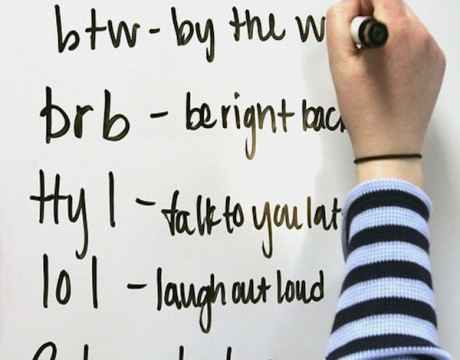
In my life, I only speak English as my main language that I use everyday. Although I speak one language, my speech differs throughout various situations each day. When I am speaking with my friends for example, it is very casual and colloquial language. I do not need to worry about being formal or sophisticated. In other words, I speak how I normally speak in conversation which comes from my comfort level with the people I am around. If I am in a group of unfamiliar or new people, I will often stay quieter and more reserved in my tone and voice. This reveals that tone affects the way that one understands what you are saying and how you want others to interpret you. Another instance of more informal language would be when I am texting with other people on my phone. Again, with my friends, it is very informal and I, as other teenagers do, use shortcuts and slang when typing certain words or phrases. Even though we type out words that are usually spelled 'you' as 'u' for a shortcut, we would never write it like that in English class or even in any form of writing that is done on paper. In other cases, when talking to a teacher or well respected adult, I speak very formally and different from how I would speak with friends or close family. I try to use all correct grammar and my language is much more sophisticated in order to generate a good reputation and demonstrate respect. I often use more formal language when the audience is something different than my peers due to the change in atmosphere and topics of discussion, to a more serious one.
The different "Englishes" I speak give me power as an individual and are important in my everyday life in different situations. When one has the ability to switch from one way of speaking to another in any type of environment, it is a very empowering skill to have. Looking at my life, I feel like I am able to judge the situation I am in by the group of people around me and the number of people I am with in order to depict which type of "English" I will speak in. Based on different factors, choosing the right way to speak in a situation is a powerful way to directly articulate what is trying to be said and it a better way to improve how different ideas are understood as an individual in everyday life.


I like how you compared and contrasted the different Englishes you speak and the effect they have on how people perceive you. I also like how you talked about how comfort levels impact how you speak, it was interesting to see what effects your speech. Do you think you'd ever be able to use the English you use around friends with people you don't know?
ReplyDeleteI really enjoyed your narrative about the different Englishes you use depending on your audience!I agree that when talking with friends and peers I am more comfortable and talk normally not focusing on my level of vocabulary as much. I also liked how you connected speech to power and I agree that being able to use different Englishes around different audiences is very powerful. How do you think others compare to your different Englishes, do you think everyone has the same opportunities to use different Englishes in everyday life?
ReplyDeleteYour piece of writing was very interesting to read on your types of Englishes and the effects that each one holds. I agree with your descriptions of speech for them and how talking to friends is more casual and in front of unfamiliar people is more reserved. I also liked how in your power paragraph you mentioned about how switching the way you speak gives you power. What would individuals be like if we only spoke one type of those Englishes? How would it effect the way we live?
ReplyDelete